
Good posture is not about keeping your body perfectly still all day. It is about developing comfortable movement habits and giving your body the support it needs during everyday activities. From sitting at a desk to walking, exercising, and standing, the way you position your body can influence how comfortably you move.
Building better posture and stability does not require a complicated routine. Small adjustments throughout the day, combined with simple strengthening and mobility exercises, can help you become more aware of how you move.
Pay Attention to Your Everyday Position
Many people spend long periods sitting, working, driving, or looking at screens. Over time, it can be easy to settle into positions that feel comfortable in the moment but may leave your body feeling stiff.
Start by becoming more aware of how you sit and stand. Keep your feet supported when sitting, avoid staying in one position for too long, and allow your shoulders to remain relaxed rather than constantly pulling them backward.
Good posture should feel natural and sustainable rather than forced.
Build a Stronger Core
Your core plays an important role in supporting your body during movement. A stronger core can help you maintain control while performing everyday activities and exercises.
Simple exercises such as planks, dead bugs, bird dogs, and controlled abdominal movements can be included in a regular fitness routine. You do not need to perform dozens of exercises. A few well-controlled movements can provide a useful starting point.
Focus on steady breathing and proper form instead of rushing through repetitions.
Strengthen the Muscles That Support Movement
Posture is influenced by more than the back and shoulders. Your hips, legs, core, and upper body all contribute to how you stabilize yourself.
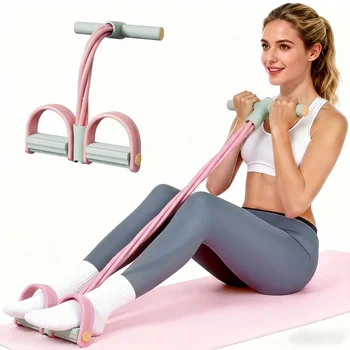
Exercises such as squats, glute bridges, resistance-band rows, and controlled lunges can help develop strength throughout the body. Resistance bands are particularly useful for home workouts because they can provide additional resistance without taking up much space.
A balanced strength routine can help you develop greater control across different movements.
Do Not Ignore Mobility
Strength and mobility work well together. If certain areas of your body feel stiff, gentle mobility exercises and stretching can help you move more comfortably.
Take regular breaks from sitting and use those moments to walk around, roll your shoulders, gently rotate your torso, or stretch your hips and legs.
Short movement breaks can be easier to maintain than waiting until the end of the day for one long stretching session.
Create Better Screen Habits
Technology can make it easy to spend hours in one position. Instead of trying to maintain a perfect posture throughout the entire day, focus on changing positions regularly.
Position your screen at a comfortable height, keep frequently used items within easy reach, and take brief breaks when possible. If you work at a desk, consider alternating between sitting and standing when your setup allows it.
These small adjustments can make your workspace more comfortable and encourage more movement throughout the day.
Improve Your Stability With Balance Exercises
Stability is another important part of controlled movement. Simple balance exercises can help you become more aware of how your body shifts and responds.
You might practice standing on one foot near a stable surface for support. As your balance improves, you can gradually introduce more challenging variations.
Always choose an exercise level that allows you to maintain control. There is no need to rush into difficult balance exercises.
Practice Better Movement During Workouts
Good movement habits matter during exercise as well as everyday activities. Before increasing resistance or adding more repetitions, make sure you can perform each movement with proper technique.
Move through each exercise with control and avoid using momentum to complete repetitions. If your form begins to break down because you are tired, consider taking a short break or reducing the intensity.
Developing good technique can make your workouts more productive and easier to manage.
Make Posture Part of Your Daily Routine
Improving posture and stability is less about finding one perfect exercise and more about developing consistent habits. Stand up regularly, change positions, strengthen your body, work on mobility, and pay attention to how you move.
You do not have to overhaul your entire lifestyle at once. Start with one or two small changes and build from there.
With regular practice, better movement awareness can become a natural part of your day. Combined with strength, mobility, and balance work, these habits can help you create a more supportive foundation for everyday movement and exercise.
Build better movement habits with fitness essentials designed to support an active routine.





0 Comments