
You do not need a fully equipped gym to create an effective workout routine. With a few versatile pieces of equipment and a little planning, you can train several major muscle groups from the comfort of home. The key is to focus on simple movements that work together to create a balanced routine.
A home workout can be especially useful when time, space, or access to a gym is limited. Instead of worrying about having every piece of fitness equipment available, focus on exercises that help build strength, improve mobility, and keep your body moving consistently.
Start With the Basics
A well-rounded full-body routine should include movements that target your legs, upper body, core, and cardiovascular fitness. You can accomplish this without filling your home with bulky equipment.
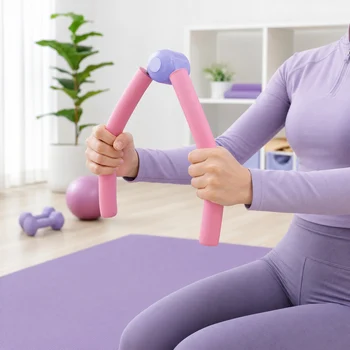
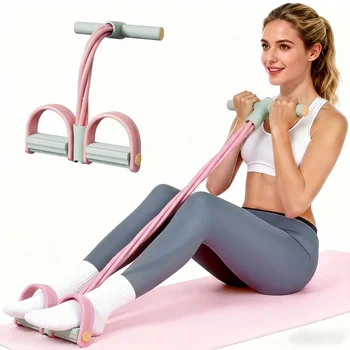
Bodyweight exercises such as squats, lunges, push-ups, glute bridges, and planks provide a strong starting point. When you want to add resistance, simple equipment such as resistance bands can make familiar exercises more challenging while remaining easy to store.
The goal is not to make every workout complicated. A routine that is simple enough to repeat consistently can be more useful than an elaborate program that is difficult to maintain.
Choose Equipment That Can Do More
When space is limited, versatility matters. Look for equipment that can be used for several different exercises rather than relying on a separate item for every muscle group.
Resistance bands are a practical example. Depending on their type and resistance level, they can be used for rows, presses, squats, lateral movements, glute exercises, and more. A yoga or exercise mat can also provide a comfortable surface for floor-based exercises, stretching, and core work.
A few adaptable tools can give you plenty of options without taking over your living space.
Build Your Routine Around Movement Patterns
Rather than choosing random exercises, organize your workout around different types of movement. This makes it easier to create a balanced session.
You might include:
- Squat movements: Try bodyweight squats or banded squats to work the lower body.
- Push movements: Push-ups or resistance-band presses can train the chest, shoulders, and arms.
- Pull movements: Resistance-band rows can help strengthen the back and arms.
- Hip movements: Glute bridges and banded hip exercises can focus on the hips and posterior chain.
- Core movements: Planks, dead bugs, or controlled leg exercises can challenge the core.
You do not have to perform every movement in every session. Rotate exercises according to your goals, available time, and fitness level.
Keep Your First Workouts Manageable
One common mistake with home workouts is trying to do too much too soon. Starting with a manageable amount of exercise gives your body time to adjust and makes the routine easier to maintain.
For example, you could choose four or five exercises and perform a few controlled sets of each. Focus on maintaining good form instead of rushing through repetitions. As the exercises become more comfortable, you can gradually increase repetitions, resistance, or the number of sets.
Progress does not always mean making a workout dramatically harder. Small improvements made consistently can add up over time.
Make Your Workout Fit Your Day
One of the biggest advantages of exercising at home is flexibility. You can adapt your routine to the time you have available.
On a busy day, a shorter workout may be enough to keep you active. When you have more time, you can add another round, spend more time warming up, or finish with mobility exercises and stretching.
Creating a routine that works with your schedule can also remove some of the pressure around exercise. Instead of waiting for the perfect time to work out, find a realistic window and make the most of it.
Do Not Forget Your Warm-Up and Cooldown
Even a short home workout benefits from preparation and recovery. Start with gentle movements that gradually prepare your body for exercise. This might include arm circles, bodyweight squats, light marching, or dynamic stretches.
After your workout, slow things down with gentle stretching and relaxed movement. A few minutes of cooldown work can help you transition from exercise back into your normal routine.
These small habits can make your workouts feel more comfortable and help you approach each session with greater consistency.
Make Consistency the Goal
The most effective home workout routine is one you can actually stick with. You do not need to exercise for hours or own a large collection of equipment to make movement part of your regular schedule.
Start with the equipment you have, choose exercises you can perform confidently, and build gradually. As your routine develops, you can introduce new movements or equipment to keep your workouts useful and engaging.
A simple setup can go a long way when it supports regular movement. With the right approach, even a small space and a few versatile pieces of equipment can become the foundation for a practical full-body fitness routine.




0 Comments